 Hanoi City Guide
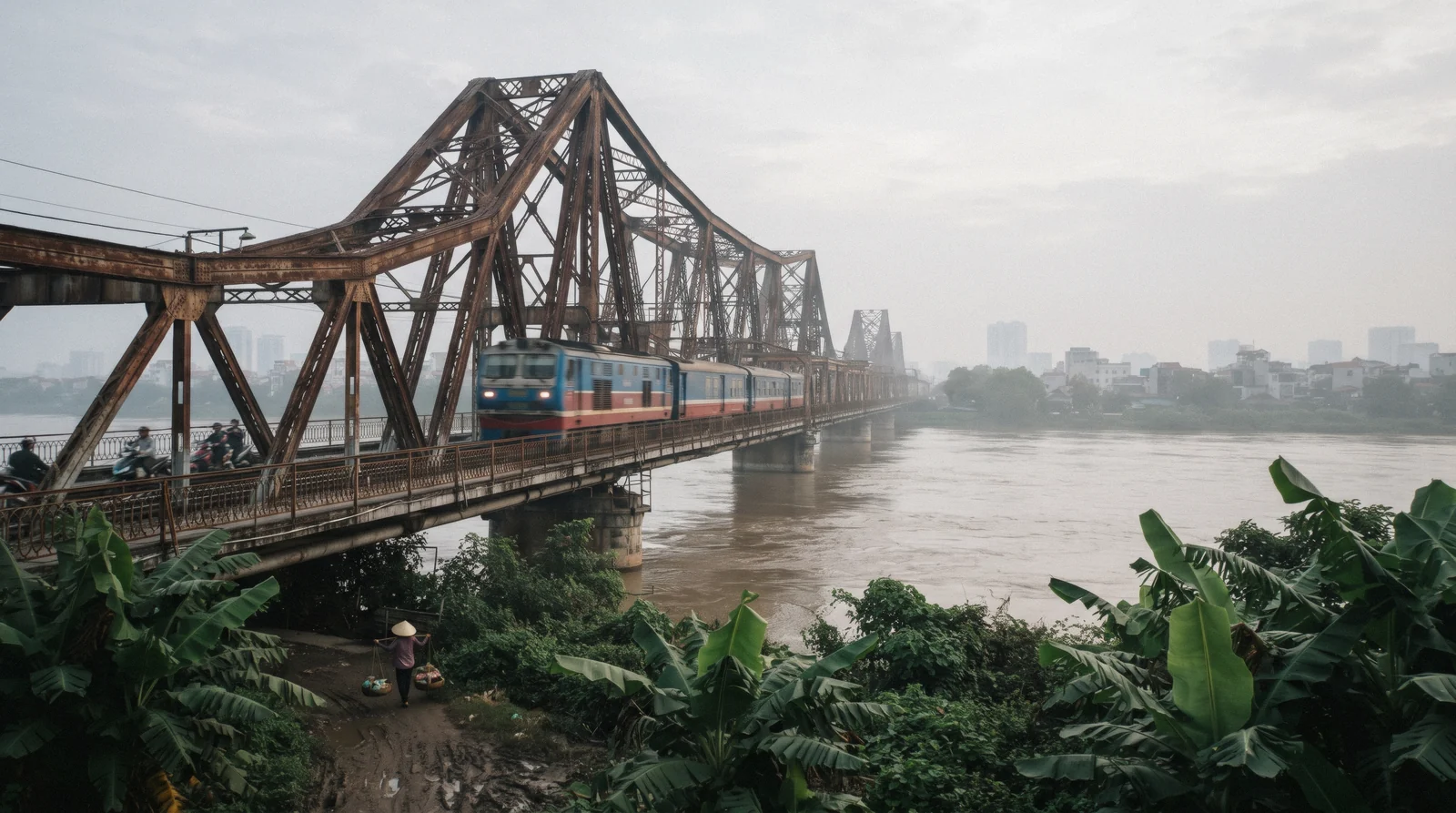
Long Bien Bridge
Long Bien Bridge is the 1,862 m steel bridge that carries a railway and two narrow lanes over the Red River on the north-east edge of the Old Quarter, and it is free to walk at any hour. This page covers who built it and why, what it survived, the rules for crossing on foot, whether trains still run, and the tours that stop on it or ride across it. It also explains the 2026 repair closure and how to fit the bridge into a day in Hanoi with the other things to do in Hanoi.
Quick answer Free to walk, 1.9 km long, a live railway in the middle, and the best hours
Long Bien Bridge is free, open day and night and about 1,862 m long, so a one-way walk takes roughly 25 minutes. A single railway track runs down the middle with a footpath and a lane for motorbikes and bicycles on each side. The footpaths were rebuilt in a 60-day closure that ended in May 2026, and trains ran throughout. Go at dawn or in the last hour of light, and never step onto the track.
Key takeaways
- Walk it, do not drive it. A one-way crossing is about 25 minutes (our estimate), and the Old Quarter end is the easy one to reach on foot.
- Want a guide and a ride? The bike, motorbike and photo tours below cross it, and one rail walk rides a flower train over it.
- Do it with the night market. The bridge is about 15 minutes on foot from Dong Xuan Market and the night market (our estimate), so pair it with a weekend evening.
Key Facts
Opening Hours
| The bridge, footpaths and lanes | Open day and night, no gate |
|---|---|
| Repair closure to motorbikes, bicycles and walkers (ended) | 28 March to 27 May 2026 |
Closed None now. The bridge reopened on 28 May 2026 after a 60-day closure for repairs to the pedestrian and motorbike lanes. Trains kept running throughout.
Admission
- Adult
- Free
- Reduced
- Not applicable
- Free
- Everyone, on foot, by bicycle or by motorbike
Planning It
- Time needed
- Our estimate: about 25 minutes one way on foot at a slow pace, 90 minutes for a return walk with photo stops
- Address
- Long Bien Bridge over the Red River, between Hoan Kiem and the Gia Lam bank, Hanoi. The Old Quarter end is at the foot of Tran Nhat Duat street
The bridge has no ticket, so the table starts with the free crossing and then lists the tours that ride or stop on it. Each tour row uses the operator's own listing and none is a bridge-only product.
Do you want the bridge alone or as part of a ride? Walking it costs nothing. A guide adds the history and the surrounding sights, and a photo tour adds a photographer.
| Option | Price | Length or limit | What it covers | Book |
|---|---|---|---|---|
| Walking or cycling acrossAnyone, at any hour | Free | Open day and night | Footpaths and lanes on both sides, railway in the middle. Cars and tricycles are banned | Official site |
| Small-group Old City cycling tourA slow, guided ride | Listed at $32 | 4 hours | A guided ride in groups of 8 or fewer that lists Long Bien Bridge among 11 places, with egg coffee and entrance fees. | Check Availability |
| Bike tour through hidden gems and Banana IslandA longer ride with a meal | Listed at $31 | 3 to 8.5 hours | A 10 km ride with hotel pickup and a 30-minute optional stop at the bridge, with lunch or dinner included. | Check Availability |
| Motorbike tour, most popular experienceA fast city loop | Listed at $29 | 3.5 to 4 hours | A guided motorbike ride that lists the bridge, Banana Island, West Lake and Train Street, with a local meal and egg coffee. | Check Availability |
| Railway walking tour with Train Street and flower trainThe railway story | Listed at $37 | 3.5 hours | A walk that ends with a flower train ride across Long Bien Bridge, per the listing. Only 4 reviews so far. | Check Availability |
| Hanoi Instagram tourPhotographers and couples | Listed at $32.83 | 4 hours | A photo tour for up to 2 guests by car or motorbike with seven stops, including the bridge. | Check Availability |
The tours are different products from different operators and are not ranked against each other.
Tours That Cross or Stop at Long Bien Bridge
These seven cards each name the bridge in their listing. Four are bike or motorbike rides, one is a railway walk, one is a photo tour and one is a private photoshoot. None of them is a bridge-only product, so check the stop list before you book.
 from $32
Explore Hanoi Old City on a Small-Group Cycling Tour
Four-hour guided Old City bike ride in groups of 8 or fewer, starting at 8:00 or 13:00 from Hoi Vu Street.
Check Availability from $31
Bike Tour Through Hidden Gems and Banana Island
Guided 10 km Hanoi bike ride with hotel pickup, lunch or dinner included, and a $10 surcharge on holidays.
Check Availability from $29
Hanoi Motorbike Tour: Most Popular Experience
Four-hour guided motorbike ride with hotel pickup, local meal and egg coffee. Entrance fees included.
Check Availability from $59
Hanoi Motorbike Tour Led by Women: Hanoi City Half Day
Women-led 4.5-hour motorbike half day with Banana Island, B52 Museum and lunch, from the Old Quarter.
Check Availability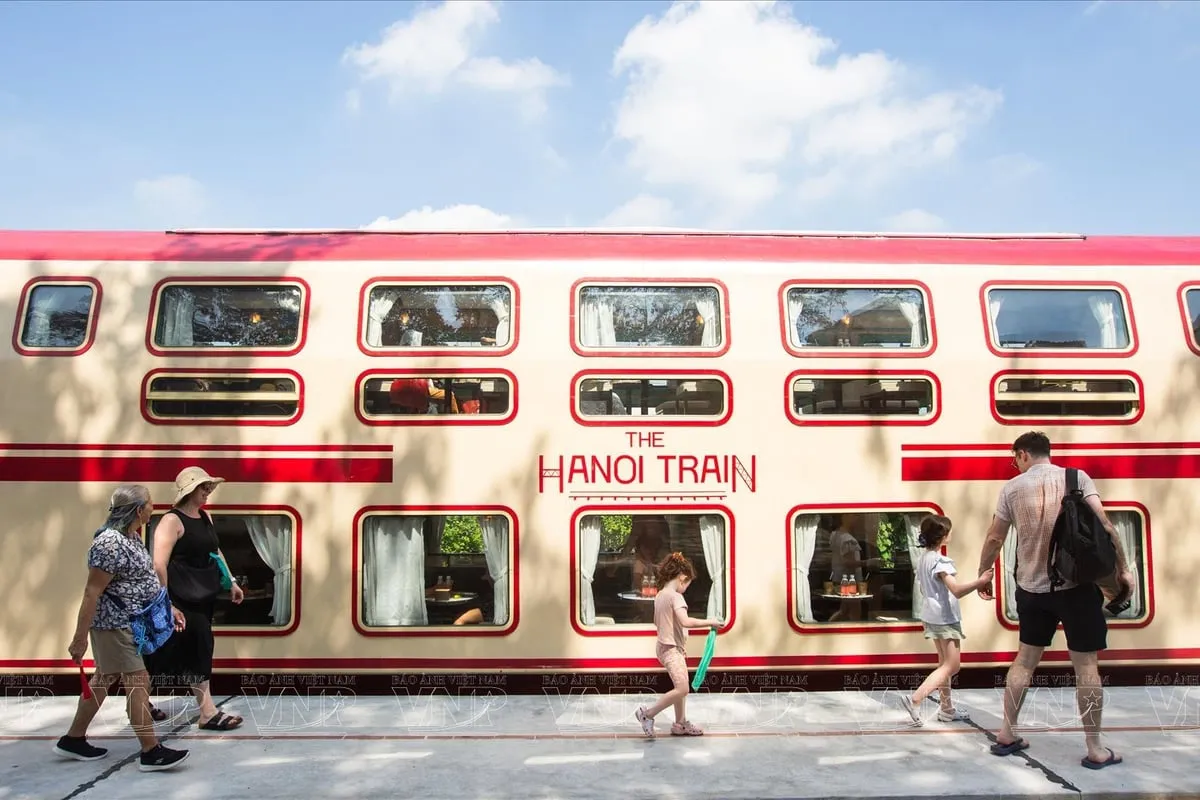 from $37
Railway Walking Tour With Train Street & Flower Train
Train Street walk plus a Flower Train ride over Long Bien Bridge. Only 4 reviews so far, rated 5.0.
Check Availability from $32.83
Hanoi Instagram Tour: The Most Scenic Spots
4-hour Hanoi photo tour for a maximum of 2 guests by car or motorbike, with Train Street and Long Bien Bridge.
Check Availability from $20
Hanoi Private Photoshoot - Iconic Spots & Hidden Gems
Private photoshoot from $20 with 5 edited photos per person and all raw files. Ao Dai rental is extra.
Check AvailabilityPrices, ratings and details are the platform's own. Dollar figures are the listed prices. The platform bills in your account's currency.
Why Is Long Bien Bridge Famous?
Because it is the oldest steel bridge in Vietnam and a working piece of the city. Nobody queues for it and nobody buys a ticket. People come because a century-old railway bridge still carries trains, bicycles and motorbikes across the Red River.
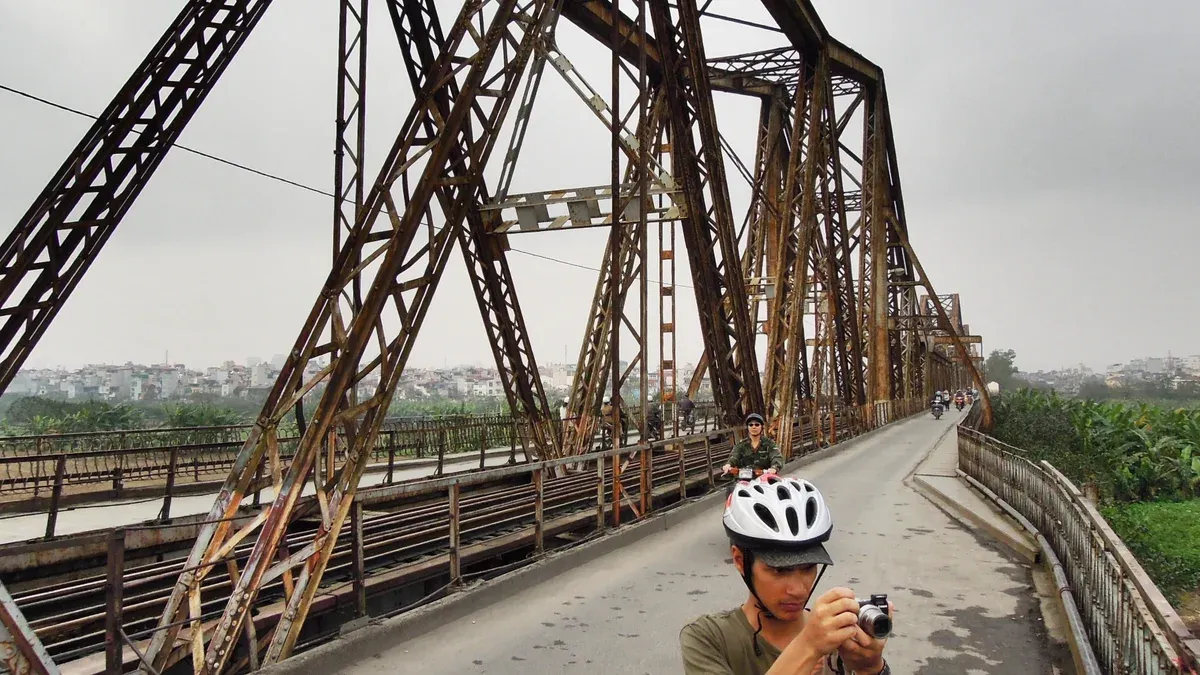
Steel trusses, the railway and the side lane on Long Bien Bridge. Photo: David McKelvey from Brisbane, Australia, CC BY 2.0, via Wikimedia Commons
Vietnamnet describes it as the first steel bridge in Vietnam and once one of the largest steel bridges in the world. It carries a single railway line in the middle and a lane on each side for motorbikes and bicycles, with the footpath beside the railings. That mix is the draw. You walk on steel girders at the height of the track, with a freight or passenger train on one side and a scooter loaded with vegetables on the other.
It is also a view. The Old Quarter is on one bank and the Red River floodplain with its banana fields is on the other, and the bridge gives the plainest line of sight between the two. Hanoi people use it for morning exercise, and photographers use it because the repeated diagonal trusses frame almost any shot. The Hanoi ceramic mosaic mural runs along the same river dyke.
Source: Vietnamnet, Vietnam News.
How Old Is Long Bien Bridge and Who Built It?
It opened in 1902 and was designed and built by the Paris firm Daydé & Pillé. The firm's own plate is still riveted to the ironwork and reads 1899 to 1902.
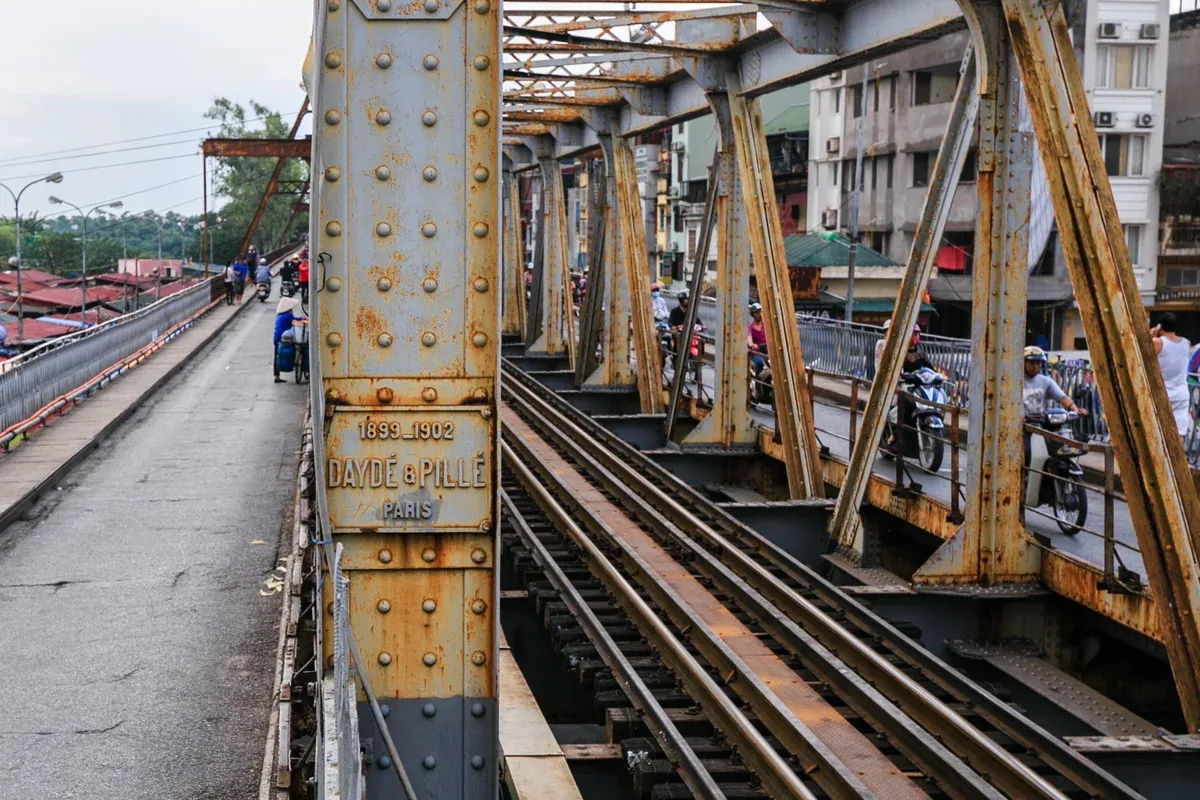
The maker's plate on Long Bien Bridge, dated 1899 to 1902. Photo: Quangpraha, CC0, via Wikimedia Commons
Vietnamnet says work began in September 1898 and the bridge opened in February 1902. Vietnam News gives the build as 1899 to 1902, which matches the maker's plate. Some reference works print 1903 for the opening, so if two sources disagree by a year, the plate and the state press both point to 1902.
The French named it the Paul Doumer Bridge after the Governor-General of Indochina who pushed for it. Hanoi people call it the Bo De bridge or the Gia Lam bridge after the two ends. It is often called Eiffel's work, but the plate names Daydé & Pillé of Paris, not the Eiffel company.
The reason it exists is a railway. Vietnamnet says the bridge completed the line linking the Hai Phong estuary with Yunnan in China and connected Hanoi to Dong Dang in Lang Son. It carried trains only at first, and road traffic was added in 1922 and 1923.
Lime came from Thua Thien-Hue, stone and ironwood from Thanh Hoa and cement from Hai Phong, and Vietnamese workers dived about 30 m below the surface to build the piers.
Source: Vietnamnet, Vietnam News.
What Happened to Long Bien Bridge in the War?
American bombing hit it 14 times and the line was reopened after 41 days of repair. The bridge was a supply route, so it was a repeated target.
Vietnamnet records that about 1,500 m of the structure was affected, nine spans fell and four pillars were badly damaged. After 41 days and nights of repair the first train crossed again on 4 March 1973, following the Paris Agreement. The article says the structure is otherwise largely unchanged from the original, apart from the war-damaged sections.
That patchwork is visible today. The spans are not identical, and some girders are plainly later replacements. It is one reason the bridge looks uneven rather than like a single clean frame, and why the walk is more interesting than a straight crossing suggests.
For the wider story, the Hoa Lo Prison page and the war-history tours cover the same decade from inside the city.
Source: Vietnamnet, Vietnam News.
Can You Walk on Long Bien Bridge?
Yes, on the footpaths, which are free and open day and night. Walkers share the bridge with motorbikes and bicycles, and cars and tricycles are banned.
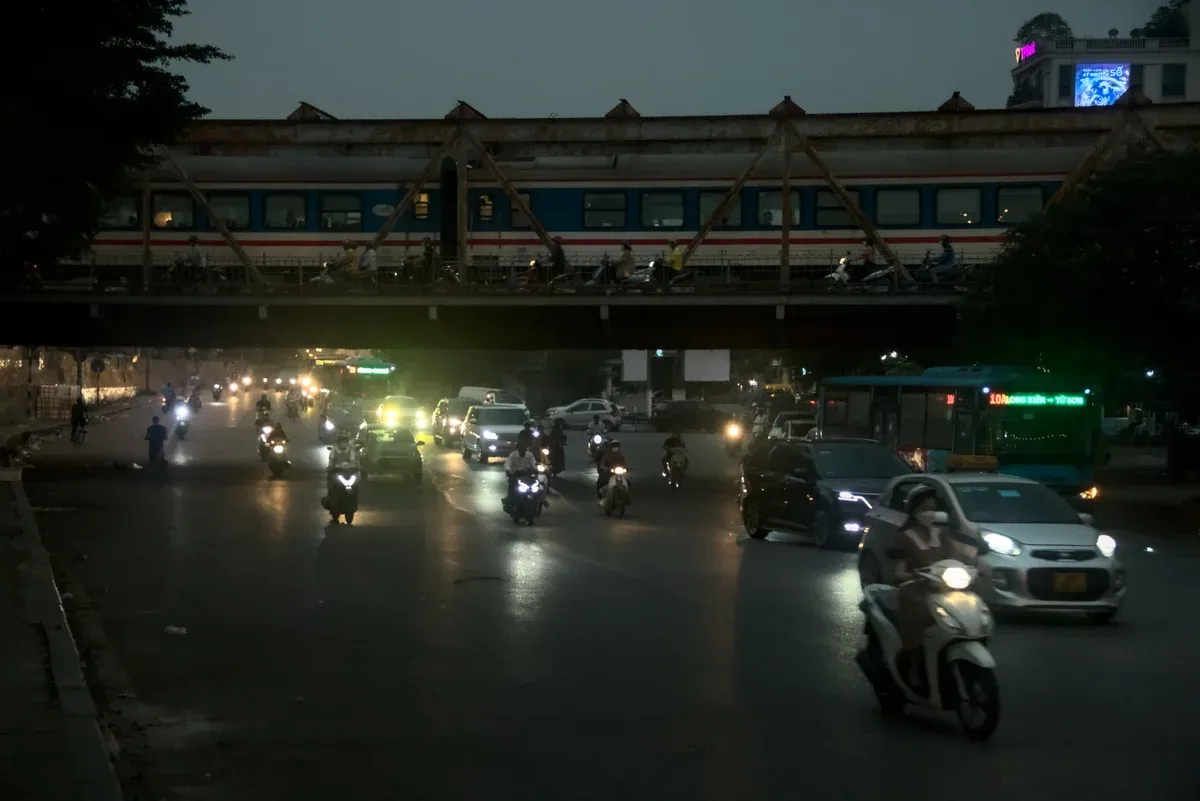
A passenger train above Tran Nhat Duat street at dusk. Photo: Benjamin Smith, CC BY-SA 4.0, via Wikimedia Commons
Vietnamnet says cars and tricycles may not use the bridge and that people cross from sunrise until late at night. The footpaths run on both sides outside the lanes. The 2026 repairs focused on exactly those footpaths and the motorbike lanes, with new cement lanes, asphalt on the non-motorised lanes and replaced handrails.
Walk rules are simple. Stay on the footpath. The track in the middle is a live railway. Do not walk on it for a photo, even when no train is in sight. Keep your phone in your hand and your bag on the railing side, because the UK Foreign Office warns that bag-snatching from motorcycles is common in Hanoi.
The Old Quarter end is the practical start. Walk out through the quarter's north-east edge toward Tran Nhat Duat street and the bridge is above you. A one-way crossing to the Gia Lam bank is about 25 minutes at a slow pace, so plan 90 minutes for there and back with stops.
The far end has no sights of its own, so most walkers turn around after the first half or take a bus or Grab back.
Source: Vietnamnet, Vietnam News, UK Foreign, Commonwealth and Development Office.
How Long Is Long Bien Bridge?
The figure most often given is 1,862 m, with 19 steel spans. Other references print a longer total, which probably counts the approach ramps.
Vietnamnet gives 1,862 m and 19 steel beams. Some references print a total of about 2,290 m, which looks like the bridge plus the approaches, though they do not say so. Treat 1,862 m as the span you actually walk.
The practical numbers are ours. At a slow walking pace of about 4.5 km an hour the span takes roughly 25 minutes in one direction. The Old Quarter end sits about 1.7 km in a straight line from Hoan Kiem Lake, so a walk from the lake to the near end is another 25 minutes or so on foot, or a short Grab ride.
Source: Vietnamnet.
Was Long Bien Bridge Closed in 2026 and Is It Open Now?
It was closed to motorbikes, bicycles and walkers from 28 March to 27 May 2026 and has been open since 28 May. Trains ran throughout, so only the lanes and footpaths stopped.
Hanoi's Department of Construction announced the 60-day closure on 26 March. The work covered the pedestrian walkways and the lanes for motorbikes and non-motorised vehicles on both sides. Vietnam News reports that more than 80 workers from Ha Hai Railway Joint Stock Company worked in four teams across three daily shifts, with most concrete poured at night, and that the bridge was inspected before reopening.
The result is that the walking surface is newer than the structure. Damaged railings were replaced, ageing steel was reinforced and the rust along the railway was dealt with. Vietnam News also notes the bridge was classified as structurally weak before the work and carries tens of thousands of crossings a day. Check a recent report before a visit if you are travelling long after publication, since further maintenance closures are possible on a bridge this old.
Source: Vietnam News, Vietnam News.
Do Trains Still Cross Long Bien Bridge?
Yes, trains kept crossing through the 2026 repairs, but no public timetable is printed for the bridge. The service on this section was also the subject of a plan to reduce it.
Vietnam News states that train services continued throughout the renovation. A VnExpress report from March 2026 says the section from Hanoi Station through Long Bien to Gia Lam carried two daily Hanoi to Lao Cai passenger pairs at that time, and that the Ministry of Construction agreed to reduce passenger and tourist trains there and stop freight. It was not confirmed how or when that would be applied.
The consequence for you is simple. Never plan a photo around a specific train. If one crosses while you are on the bridge, you will see it, and if not you still have the bridge. The same advice applies to the cafe street that sits on the same railway, which has its own status on the Hanoi Train Street page.
Source: Vietnam News, VnExpress International.
When Is the Best Time to Visit Long Bien Bridge?
Early morning and the hour before sunset, in October, November or April. The bridge is open air, so rain and heat decide the walk.
The bridge has no shade. WMO normals for Hanoi put the mean daily maximum at 29.6 C in October with 126 mm of rain, and at 26.3 C in November with 48 mm over 7 rain days, which makes those two months the easiest for a 90-minute walk. April averages 27.7 C and 79 mm. June is 33.8 C with 231 mm, and August is 32.5 C with 335 mm over 18 rain days, so a midday crossing in summer is a heat and storm risk. December is 22.1 C and dry, but the Red River haze can flatten the view. The full month-by-month picture is on the best time to visit Hanoi page.
By the clock, Vietnamnet's own photo caption shows a vegetable seller crossing at dawn, and that is when the footpath belongs to locals. Late afternoon gives the warm light on the trusses and the evening commuters on the lanes. Our advice is to arrive one hour before sunset and leave as the lights come on, since the footpath is not lit evenly and the bridge is easier to enjoy when you can see the surface.
Is Long Bien Bridge Worth Visiting?
Yes if you like industrial history, photography or an unscripted walk, and no if you want a monument with facilities. There is no ticket office, no cafe on the span and no shade.
It earns its place on a Hanoi list because it costs nothing and shows a working part of the city that most sights hide. It is a poor fit for visitors with limited mobility, small children who cannot be held, or anyone nervous about scooters passing at arm's length.
If you have one day only, put the lake, the Old Quarter and the museums first, and add the bridge at the end if you finish near Dong Xuan. If you have three days or more, it fits well into the day built around the northern Old Quarter, the weekend evening market and a bike or motorbike ride along the river. Compare every guided option on the Hanoi tours page. The 1 day in Hanoi and 3 days in Hanoi plans show where it fits.
How Do You Get to Long Bien Bridge?
On foot from the Old Quarter, by Grab, or on a bike or motorbike tour that includes it. Give a driver the street name, not the landmark.
From the Old Quarter, walk toward the north-east edge and follow Tran Nhat Duat street east to the foot of the bridge. Vietnam Airlines' walking-street guide notes public parking lots on Tran Nhat Duat under the bridge. From further away, a Grab to the Tran Nhat Duat end is the cleanest instruction to give a driver.
Bus 17 from Noi Bai Airport runs to Long Bien for $0.58 (VND 15,000), from 05:10 to 22:00 by the airport's list. It ends at the Long Bien bus stop, not at the bridge ramp, so treat it as a transfer point rather than a drop-off. Our own Hanoi airport to city page explains the airport choices. For a wider plan, getting around Hanoi covers the other ways across the city.
Map of Long Bien Bridge and the Walk From the Old Quarter
The bridge runs north-east from the edge of the Old Quarter across the Red River. The pins show the Old Quarter end, the middle of the span, the far bank and the two nearest sights. Positions are plotted from street names and the bridge's published coordinates.
Positions are our plot from street names, not a survey.
What Is Near Long Bien Bridge?
Walking times are our estimates from the map, not official figures.
Dong Xuan Market and the Night Market
The weekend market runs 19:00 to midnight on Friday, Saturday and Sunday.
About 15 minutes south-west (our estimate)Hanoi Old Quarter
Thirty-six guild streets, small heritage sites and street food.
The quarter starts right at the bridge's near endHoan Kiem Lake
Free, open all day, with the red Huc Bridge and Ngoc Son Temple.
About 25 minutes south (our estimate)Hanoi Train Street
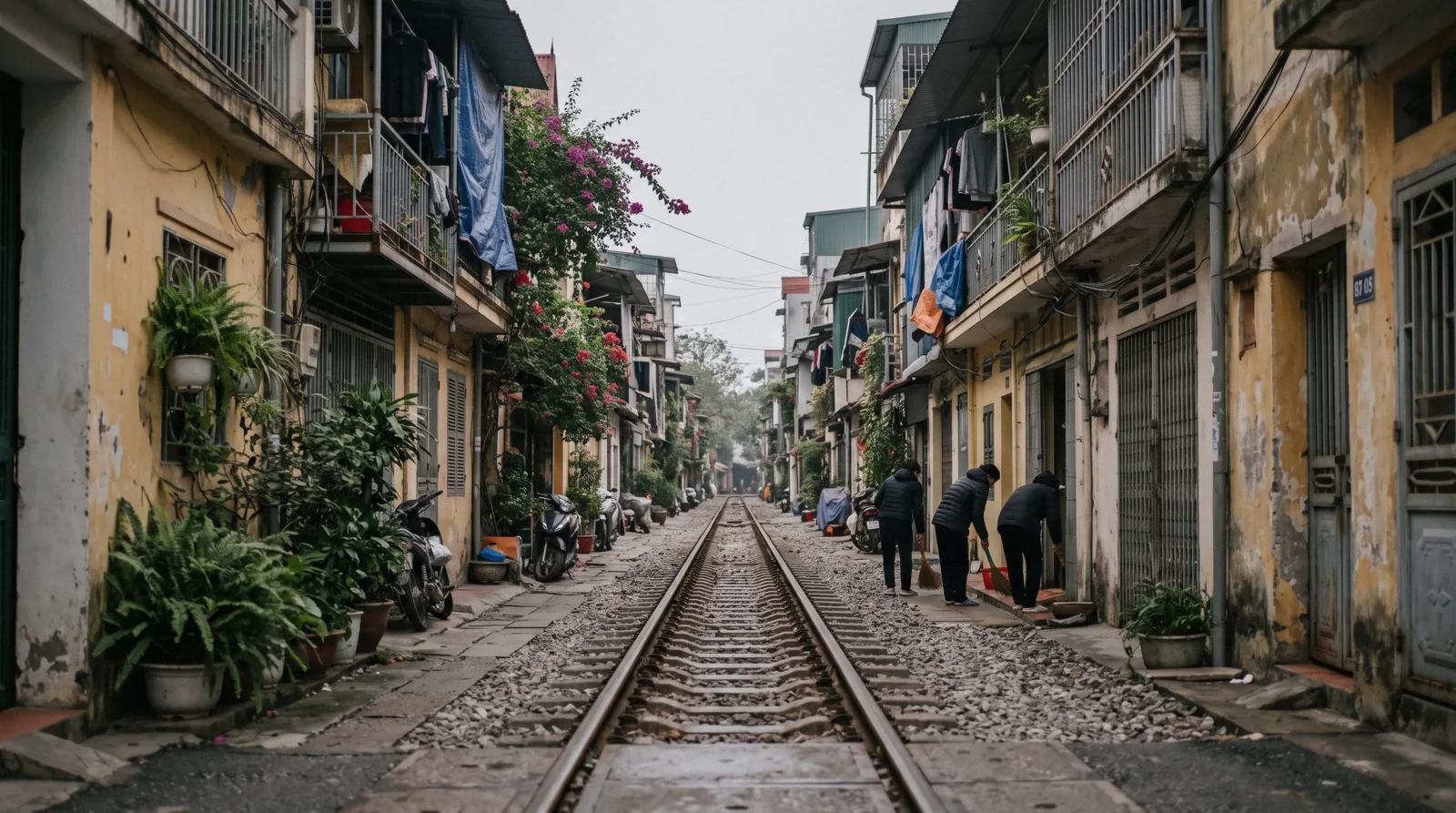
A working railway lane on the same line. Read its status before planning around a train.
About 40 minutes, or a short ride (our estimate)Ta Hien Beer Street
The evening beer corner, a natural stop after a late-afternoon bridge walk.
About 25 minutes west (our estimate)Long Bien Bridge FAQ
Why Is Long Bien Bridge Famous?
It is the first steel bridge built in Vietnam, opened in 1902 by the French firm Daydé & Pillé, and it still carries a railway, motorbikes and walkers across the Red River.
Can You Walk on Long Bien Bridge?
Yes. The footpaths on both sides are free and open day and night. Cars and tricycles are banned, motorbikes and bicycles share the side lanes, and the central track is a live railway you must stay off.
How Long Is Long Bien Bridge?
The commonly given length is 1,862 m with 19 steel spans. Some references print about 2,290 m, which probably includes the approaches. A one-way walk takes about 25 minutes at a slow pace.
Is Long Bien Bridge Worth Visiting?
Yes for history, photos and a free local walk, especially at dawn or in the last hour of light. It has no shade, no ticket office and no facilities, so bring water in warm months.
Is Long Bien Bridge Open Now?
Yes. It reopened on 28 May 2026 after a 60-day closure to motorbikes, bicycles and walkers for repairs. Trains ran throughout the work.
Do Trains Still Run on Long Bien Bridge?
Trains kept crossing during the 2026 repairs. No public timetable is printed for the bridge, and state media reported a plan to reduce passenger services on the section, so do not plan around a specific train.
Is Long Bien Bridge Safe to Walk at Night?
The footpaths are open at night, but they are unevenly lit and shared with traffic. The UK Foreign Office warns of motorbike bag-snatching in Hanoi, so carry your bag on the railing side and avoid a late solo crossing.
How do You Get to Long Bien Bridge From the Old Quarter?
Walk north-east to the foot of the bridge by Tran Nhat Duat street, about 15 to 25 minutes from most Old Quarter hotels (our estimate), or take a Grab to the Tran Nhat Duat end.
Long Bien Bridge Videos
Three videos show the crossing on foot, the history and the view from the span.
Long Bien Bridge - the Iron Soul of Hanoi
A guided look at the bridge and its history.
Video: Free Walking Tours HanoiExperience Hanoi's Charms: Walking From TrấN QuốC Pagoda to Long Bien Bridge!
A long walk that ends with the crossing.
Video: Nomadic PerceptionsHanoi’s 124-Year-Old Long Bien Bridge 🇻🇳 | From Downtown to Hidden Countryside | 4K Walk
The walk from the Old Quarter end to the river bank beyond.
Video: Wander VietnamVideos load from YouTube only when you press play.



Prices, hours and terms are set by the venue or operator and confirmed at checkout.
We may earn a commission if you book through one of our links, at no extra cost to you. Full affiliate disclosure